

Managing your money to avoid debt and financial anxiety is important. Poor financial health leads to poor physical and mental health too particularly if you:
- Don’t have enough money
- Can’t pay your bills
- Have debts which you can’t repay
- Barely have enough money to buy what you need
- Stop opening letters because you’re afraid of what’s in them!

If you are struggling or find yourself worrying about meeting your financial commitments, there is help.
- First, make a list of all your creditors, your debt balances, how much you should, and could, repay
- Don’t be afraid to contact your creditors to explain your situation and to ask for their help. Most will put a revised repayment plan in place for you
- Deal with your priority debts first. For example, if you are behind with your rent, mortgage, utility bills, or loan repayments
- Get specialist help if you are unable to repay your debts.
Types of Debt
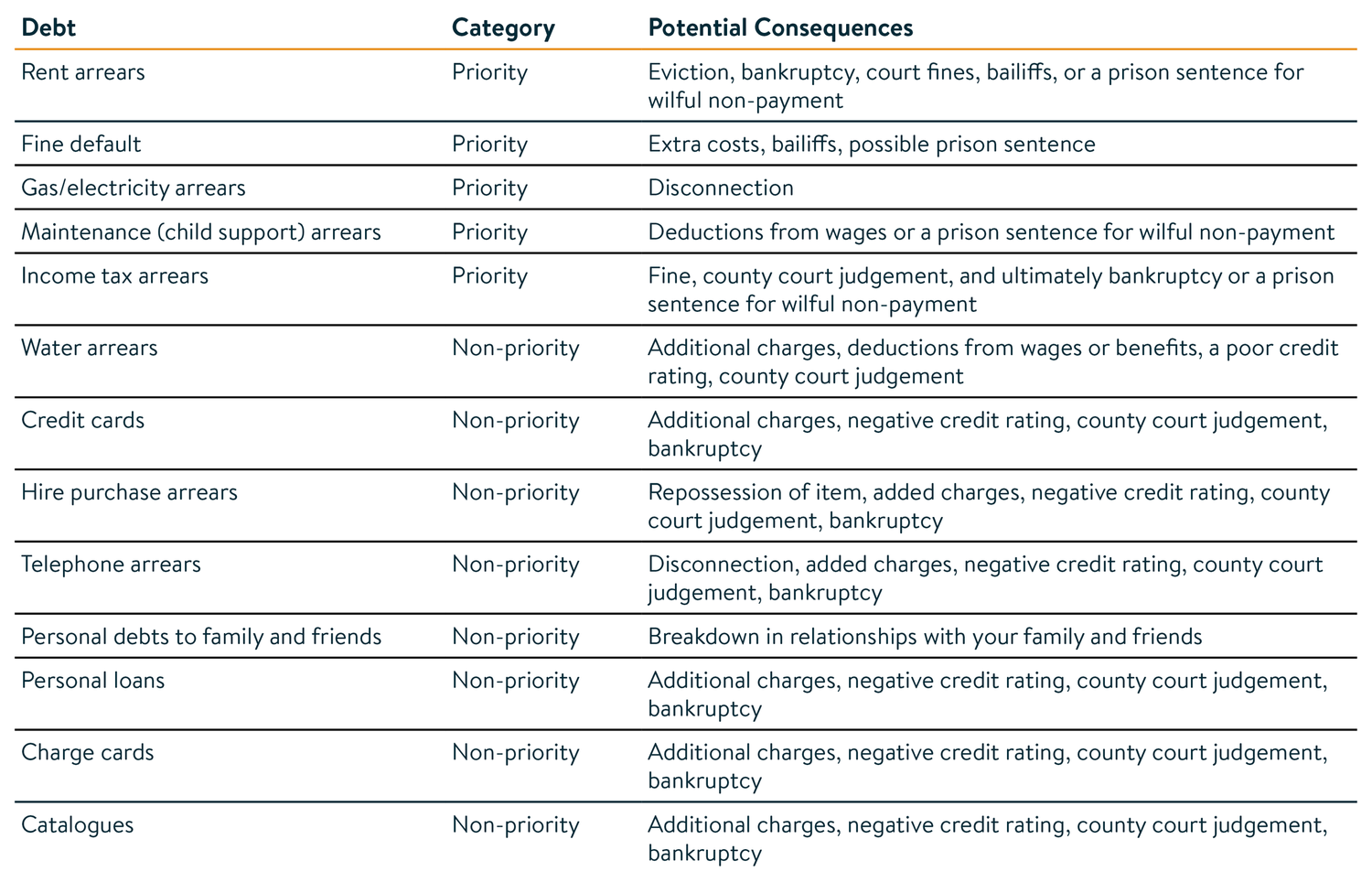
Priority debts: Non-payment of a priority debt may lead to imprisonment, the loss of your home or essential services.
You should always manage your priority debts before your non-priority debts.
Non-priority debts: The consequences for failing to repay a non-priority debt are far less serious. You may have to pay more credit charges, get a poor credit rating, county court money judgement or become bankrupt.
Get specialist help if you have borrowed money from a loan shark and have difficulty making your repayments. To report a loan shark visit the UK Government website.
- National Debtline on 0808 808 4000
(Monday to Friday 9am to 8pm and Saturday 9.30am to 1pm) - StepChange Debt Charity on 0800 138 1111
(Monday to Friday 8am to 8pm and Saturday 8am to 4pm) - The Debt Advice Foundation on 0800 043 4050
(Monday to Friday 8am to 8pm and Saturday 9am to 3pm) - Citizens advice Bureau on 03444 111 444
- Money Advice Service - call 0800 138 7777
(Monday to Friday, 8am to 8pm; Saturday, 9am to 1pm. Sunday and Bank Holidays, closed)